

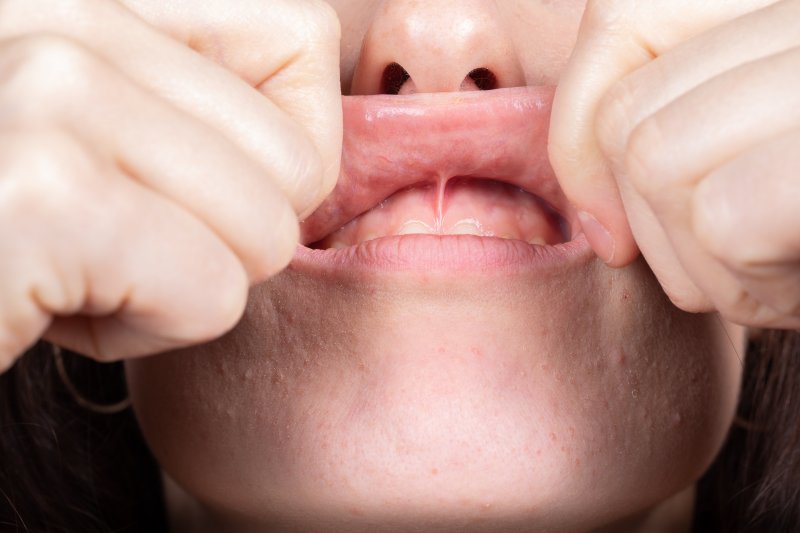
A lip or tongue-tie is common among infants who are struggling to latch or take a bottle. The lack of mobility makes daily tasks increasingly difficult, regardless of a patient’s age. If you are an adult and are wondering if your poor sleep quality, digestion issues, or speech impediment is the result of these restricted oral tissues, read on to discover whether a frenectomy might be the answer.
What Symptoms Are Common for Adults with a Lip or Tongue-Tie?
It is believed that 3-5% of people are born with a tongue-tie. Depending on the doctor, they may or may not recommend a frenectomy early on to avoid more serious complications in the future.
For those who encourage patients to “wait and see” instead of seeking treatment, some of the most prominent symptoms include:
- Difficulty eating solid foods
- A speech impediment that makes it hard to clearly speak to others
- Inadequate breathing that can lead to sleep apnea
- Difficulty drinking
- Difficulty kissing
Additional signs that a problem exists include your tongue appearing “notched” when sticking it out, difficulty lifting your tongue to touch the roof of your mouth, or difficulty moving it from side to side.
Can a Frenectomy Be the Answer?
If you want to achieve greater lip and/or tongue movement in the future, you cannot go wrong in choosing to move forward with a frenectomy. Used for centuries by individuals who wanted to help babies latch, the quick and easy process is safe and highly effective.
Your dentist will use a soft tissue laser to gently release the tie, focusing only on the treatable tissue. Within minutes, the laser delivers increased tissue movement while also cauterizing the band and sterilizing the area to prevent infection and excessive bleeding.
You’ll likely need to perform regular stretches for several weeks to prevent the banded tissue from reattaching. Your dentist will make sure you receive the appropriate information to ensure you are following the instructions properly.
Adults can suffer long-term if lip and tongue-ties are not treated properly and early on. However, with the help of a frenectomy, you can be on your way to enjoying a full range of motion.
About the Author
Dr. Amanda Hyland is a dedicated mother and dentist who understands the struggles patients face when living with a lip or tongue-tie. Although more commonly found in babies and young children, these banded tissues can still cause problems in adults. If you suspect your inability to eat properly, breathe freely, and speak clearly is because of a lip or tongue-tie, visit our website or call (507) 387-3249 to schedule an appointment.